Blackout and Room Darkening Shades for Cicero Bedrooms
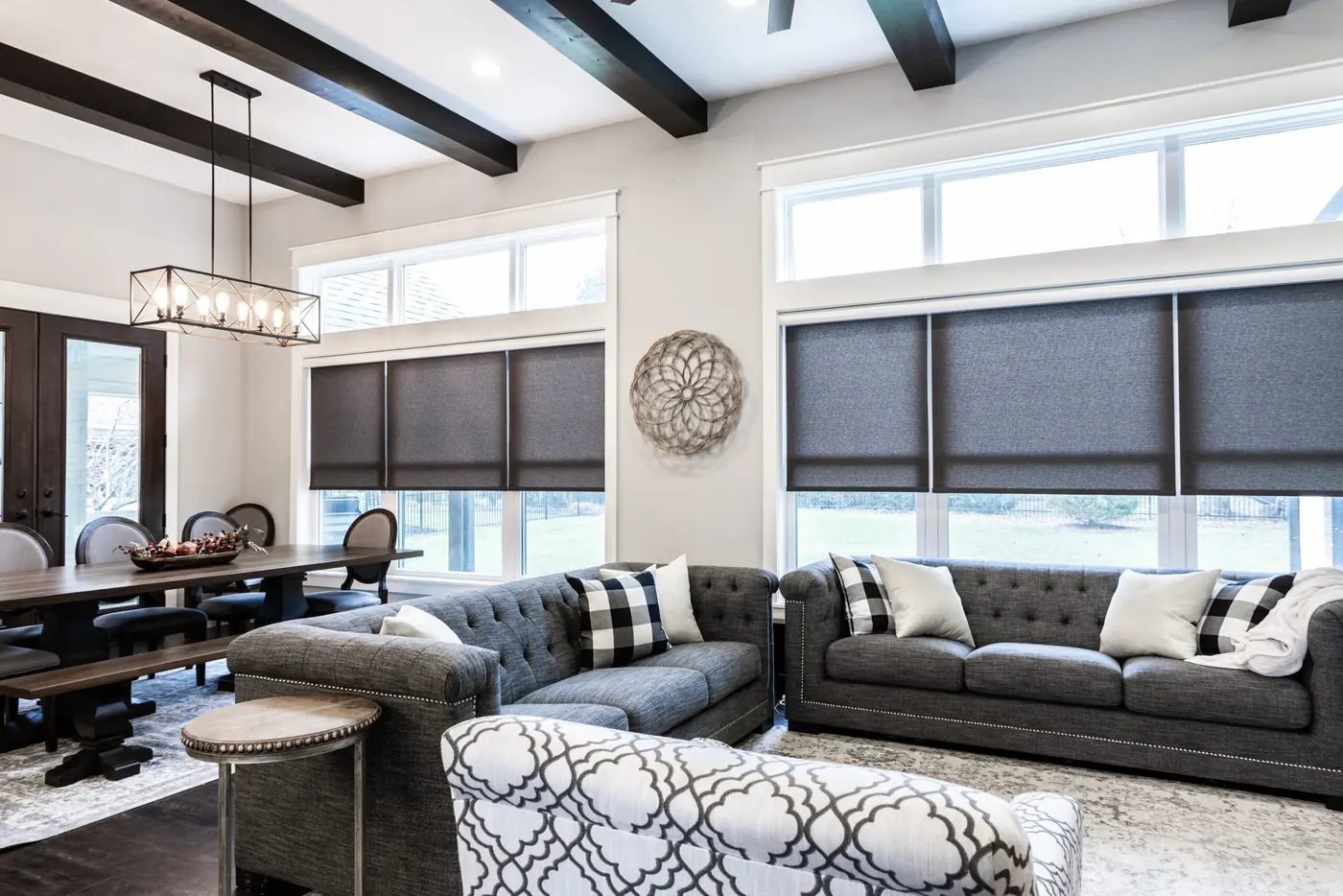
Blackout and room darkening get used like they mean the same thing, right up until someone installs a room darkening shade expecting full blackout results and wonders why the room still isn't dark.
What Blackout and Room Darkening Actually Mean
Blackout and room darkening shades get priced differently, and understanding why before you start comparing quotes makes the whole process easier. Blackout fabric blocks essentially all light passing through the material. Room darkening fabric blocks most of it, generally in the 95 to 99 percent range, using a lighter, less expensive construction.
That construction difference is the entire reason for the price gap between the two. It isn't a brand thing or a markup, it's a genuinely different amount of material and labor going into the fabric itself.
Knowing that up front helps set a realistic budget for a Cicero home, especially if you're pricing out multiple rooms and trying to decide where the extra cost of blackout is actually worth it.
Which Rooms Call for Which Option
In a Cicero home, fabric construction should follow room function, not the other way around. A primary bedroom, especially one facing west or used by a shift worker sleeping during the day, is where the full blackout construction earns its cost. A nursery is similar, though some households actually prefer the softer glow of room darkening for nighttime visits.
Living spaces used mostly during the day, like a kitchen or a dining room, generally don't need the heavier blackout build, and neither does a typical home office. Room darkening or an even lighter fabric keeps those rooms feeling open while still cutting glare and reducing UV exposure on furniture and flooring.
A media room or home theater is the other clear case for blackout, since the whole point of the room is controlling light precisely, on demand, regardless of what time of day it is outside.
Price Difference Between Blackout and Room Darkening
Assuming blackout costs only marginally more is another mistake worth correcting before budgeting a project. As a general national range, room darkening shades run $100 to $300 per window, while blackout versions of the same style typically run $130 to $380, about 15 to 25 percent higher because of the added lamination.
Across a whole house, that difference adds up fast if blackout gets chosen by default rather than room by room. Reserving blackout for the rooms that actually need it, bedrooms and media spaces mainly, and using room darkening everywhere else keeps the total project cost more reasonable.
A free in-home measure is the easiest way to see both options priced out for your actual windows in Cicero, rather than guessing at percentages from a general range.
A free in-home measure is a straightforward way to see both fabric options priced out for your actual rooms in Cicero or IN communities, rather than guessing at which ones are worth the upgrade.
How the Fabric and Construction Differ
The construction difference is where the price and the performance both come from. Blackout fabric typically has three layers laminated together: the face fabric, a foam or acrylic middle layer, and a backing, sometimes with a fourth layer added for extra opacity. That lamination is what makes the material fully opaque even held up against a bright light.
Room darkening fabric usually skips one of those layers, often relying on a napped or foam-backed liner rather than full lamination. It's lighter and folds more compactly than blackout fabric, and that lighter build costs less to produce, which shows up directly in the price.
The heavier construction of blackout fabric has a side effect worth knowing about: it also blocks more outside noise and holds more heat than a lighter room darkening fabric would, for better or worse depending on the season and the room. It's a reasonable bonus in a bedroom and less of one in a sunroom you want warmed by the winter sun.
How Much Light Gets Through, Realistically
This is the detail that trips up a lot of Cicero homeowners chasing total darkness: even a genuine blackout shade, mounted inside the window frame, leaves a small gap along the edges so the shade can raise and lower without scraping the frame. That gap, often a quarter inch to half inch per side, is a light source the fabric spec doesn't cover.
For a bedroom where sleep quality is the whole point, an outside mount with extra width overlapping the frame, or a mount with side channels that block the gap entirely, closes that light path in a way inside mount alone doesn't. It's a small design decision that matters more here than in almost any other room.
Room darkening fabric on an inside mount, by comparison, has two light sources working against total darkness: the small amount that gets through the fabric itself, plus the edge gap. For someone who just wants the room dimmer, not pitch black, that combination is usually fine. For anyone chasing full darkness, it's worth the upgrade to blackout and a better mount together.
Frequently Asked Questions
Will a blackout shade make my room completely dark?
It gets close, but not entirely, especially on an inside mount. Inside-mounted shades need a small gap along the edges, usually a quarter inch to half inch per side, to operate without rubbing the frame, and that gap lets some light through regardless of the fabric.
What's actually different between blackout and room darkening fabric?
Blackout fabric is built with multiple laminated layers, typically a face fabric bonded to a foam or acrylic core with a backing behind that, which makes it fully opaque. Room darkening fabric usually skips one of those layers, relying on a lighter liner that blocks most but not all light.
Do I need blackout in every bedroom?
Not necessarily. It depends on how the room faces and who's sleeping in it. A west-facing primary bedroom or a shift worker's room usually benefits most, while a guest room that sees occasional use is often fine with room darkening.
 What Property Managers in Cicero Should Know Before Ordering Blinds
 What Roller and Solar Shades Cost in Cicero Homes Today
 Living With Motorized Shades in a Cicero Home