Living With Motorized Shades in a Cicero Home
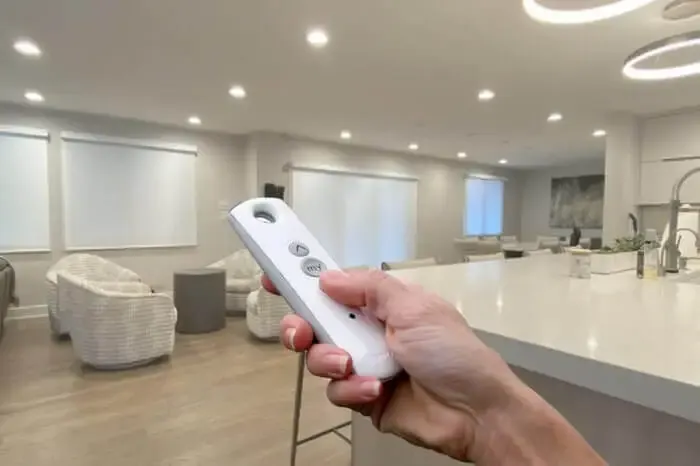
Most of what makes people unhappy with a motorized shade traces back to a decision that got skipped before the order went in, not to anything that failed later. Power method and control type are easier to settle at the kitchen table than after the installer has come and gone. This is a planning guide for a Cicero homeowner about to order motorized shades, built around the questions worth asking first.
How the Motor Gets Its Power
This is the first decision to make, and it is easiest to make before a single shade gets ordered. A motor needs power from a battery, a hardwired line, or a nearby outlet through a plug-in supply, and each option changes the price and the install, plus what you will be doing a year from now.
If the house is finished and staying that way, battery is usually the practical default, since nothing runs through a wall and no electrician needs to be scheduled. Nationally it also runs roughly $100 to $300 a window less than hardwired, which matters more the more windows are on the list. The commitment is smaller upfront and larger over time, since someone manages charging for as long as the shades are in use.
If any part of the Cicero house is being opened up for a remodel, price hardwiring before that wall closes. Running low voltage wire while studs are exposed costs a fraction of fishing it in later. Settle this room by room rather than assuming the whole house should go one way.
Battery Life and the Charging Routine
Battery complaints follow a predictable pattern, and it rarely means the motor has failed. Hunter Douglas publishes roughly a year of battery life for its PowerView motors, and a shade running well short of that is usually explained by heavy daily use, a heavier blackout fabric, or a cold room draining the cells faster.
The failure looks specific if you know what to watch for. A shade slows down first, then starts refusing to finish a full run, stopping partway instead of reaching the bottom, then stops responding altogether. None of that is a broken motor. It is a battery asking to be charged, and charging takes hours rather than minutes.
The households that stop having battery problems are usually the ones that stopped waiting for a shade to die before doing anything about it. A fixed charging schedule, once a month or once a season depending on how many shades are in the house, prevents most of what looks like a malfunction from showing up at all.
Warranty, Service and What Ownership Is Really Like
Sort out what you are paying for before signing. A motorized shade carries two warranties in one price: one for the fabric and mechanism, another for the motor and electronics, usually shorter than the first. Ask for the length of each in writing, since a motor that fails in year three against a two year electronics warranty is a very different situation than one backed for five.
The service relationship is worth pricing too, even though it never appears as its own line. A company that measures and installs typically holds the account with the manufacturer, so a claim goes through them and someone shows up. Buy the identical shade online and that relationship becomes yours to manage, along with shipping a failed part back and reinstalling it once it arrives.
Ownership costs show up in smaller ways too. A remote that goes missing on a proprietary system is not a drugstore purchase, so a spare kept in a drawer avoids a bigger inconvenience later. Seasonal schedule changes cost a few minutes twice a year, and skipping them is the main reason people feel the system is more work than it is worth.
Settle the power method and the control type before the order goes in, not after. Price hardwiring while a wall is open, and decide which windows are actually annoying enough to motorize before the fabric gets chosen. Cicero Window Treatments puts all of it in writing for Cicero homes, insured and bonded. Call (317) 863-9966 before you sign anything.
Which Windows Are Worth Motorizing
The honest answer, after living with a mixed system for a while, is that motorization earns its keep on openings that were already a hassle by hand. A few kinds prove that out fastest in an actual Cicero home:
- Anything above roughly eight feet, where hand operation meant a pole or a step stool.
- A shade behind a tub or a bed, where reaching the cord meant climbing on something.
- A room with several shades that used to take five trips and now takes one press.
- Wide or heavy glass, where a cordless lift was enough of a workout to discourage use.
Nobody in these households motorized the whole place at once. A small bathroom window touched twice a year stayed manual. A closet stayed manual. What got motorized first was whatever had been the most annoying for the longest time, at roughly $300 to $1,500 a window installed nationally.
Remotes, Hubs and Schedules
A direct system pairs a remote straight to the shade over radio. Press the button and it moves, with no app and nothing to log into, so it keeps working through an internet outage and keeps working years from now regardless of whether an app ever gets updated. What it cannot do is run on a schedule or answer a voice command.
A hub sits on the home network and translates between the shades and a phone, which is what makes schedules and scenes possible, along with voice access through a platform such as Amazon Alexa or Google Home, though support depends on the hub's firmware. The radio underneath runs on a standard like Zigbee or Z-Wave, or on Matter, the newer attempt at a shared language, with Apple Home support starting to appear on some hubs. Radio struggles through masonry or foil backed insulation, so a shade at the far end of a large Cicero house may need a repeater.
Travel limits, the stopping points set at install, keep shades in a room lined up at the same height. They drift after a hard obstruction or a battery swap, and resetting one is a short per-shade procedure, not a service call. Ask the installer to demonstrate it and note which channel runs which shade.
Frequently Asked Questions
What are travel limits and why do they matter?
They are the upper and lower stopping points programmed into each motor at install. They are what makes several shades on one wall stop at exactly the same height instead of an uneven row. Limits can shift after a battery change or if a shade hits an obstruction on the way down. Resetting them is usually a short procedure you can do yourself, so ask the installer to demonstrate it and to write down which channel runs which shade.
Which windows are actually worth motorizing?
Anything above roughly eight feet, where hand operation means a pole or a ladder. Shades behind a sink, a tub or a bed. A room with several shades that should move together, since one button replaces several trips nobody actually makes. Large or heavy glass, where a cordless lift is a workout. Any opening where reach or mobility makes a manual shade a genuine barrier. A small bathroom window touched twice a year is not on that list.
Is hardwired better than battery?
It is better in specific situations rather than in general. Hardwired never needs charging, which makes it the right call for high openings and for houses with a lot of shades. It costs more, since battery motors run roughly $100 to $300 a window less nationally, and retrofitting wire into a finished second floor is slow going. In a finished house with a handful of shades, battery is usually the sensible default.
 What Property Managers in Cicero Should Know Before Ordering Blinds
 What Roller and Solar Shades Cost in Cicero Homes Today
 The Cicero Homeowner's Guide to Blind and Shade Repair