The Cicero Homeowner's Guide to Blind and Shade Repair
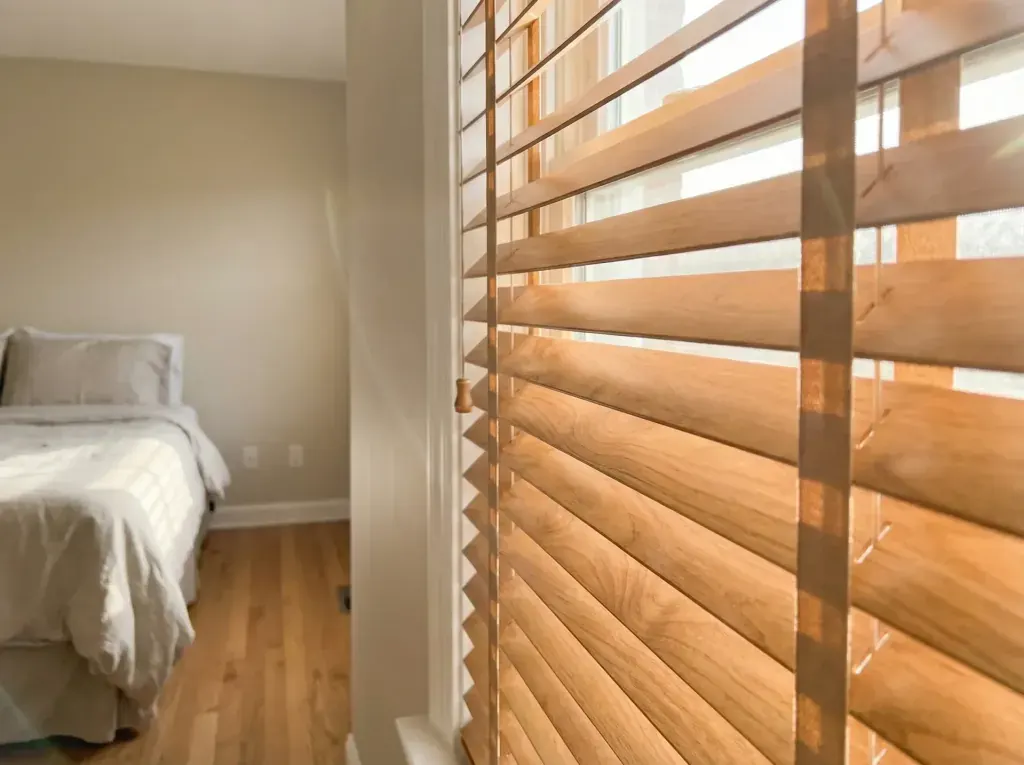
Ask around Cicero and everyone has a blind story, one slat that won't sit right, a wand that spins for nothing, a shade that creeps down on its own. Most of those are small and specific, and nearly all of them are fixable. Here's what's actually going on inside a blind or shade when something stops working the way it should.
Blinds and shades fail one part at a time
Think of a blind like a car. When the alternator dies, you replace the alternator, not the car. A covering works the same way: hardware in the headrail, plus a cord or chain lift, plus slats or fabric doing the light control. Each piece can fail entirely on its own.
The diagnosis starts with one plain question: what exactly is it doing wrong? Sliding down under its own weight is a cord lock or clutch problem. A wand spinning freely with no movement is almost always a stripped tilt gear. A low slat points to a broken ladder rung. None of that is guesswork once you're standing in front of it in a Cicero living room.
When repair beats replacement, and when it doesn't
Stock blinds run roughly $60 to $600 a window nationally, custom measured and installed roughly $250 to $2,600. A repair, cord lock, gear, restring, sits at a fraction of either number, untouched unit and all. On one broken part, repair wins almost every time in a Cicero house, new or old.
A few things flip that. Fabric gone pale and brittle on the sun side has fading you can slow but never stop, and a tear at a fold ends the conversation. A discontinued line with no hardware left turns easy into a fabrication job. Small kids with older corded blinds argue for replacing rather than restringing, since ANSI/WCMA A100.1-2022 is the standard that moved this industry toward cordless. A unit that never fit right stays annoying no matter what's repaired, and a third repair on one blind is a pattern, not bad luck.
Parts decide whether any of this is even possible. Cord locks, wands, gears, and lift cord are close to universal. Clutches depend on tube diameter and load class. Motors are proprietary, a retired generation forces a new tube. Dye lots complicate multi-shade rooms too, a 2008 white won't necessarily match one from two years earlier. Conversion kits exist for some blinds, though a new stock cordless unit often wins once labor's counted. Give ordered parts a few real weeks to show up.
Clutches and cordless lift systems
A clutch holds a roller, cellular, or woven wood shade at height once you stop pulling the chain. Worn, it slips lower each cycle, or jumps the sprocket and seizes. Two usual culprits: a shade heavier than its clutch class (a spec problem, not a broken part), or a tensioner that was never actually fastened down.
Cordless shades use a spring motor instead, tensioned to counterbalance the fabric so a light touch lifts it and holds. That spring relaxes gradually, and a shade that held firm starts creeping down. Fix is a tension adjustment or new cartridge, not a full swap.
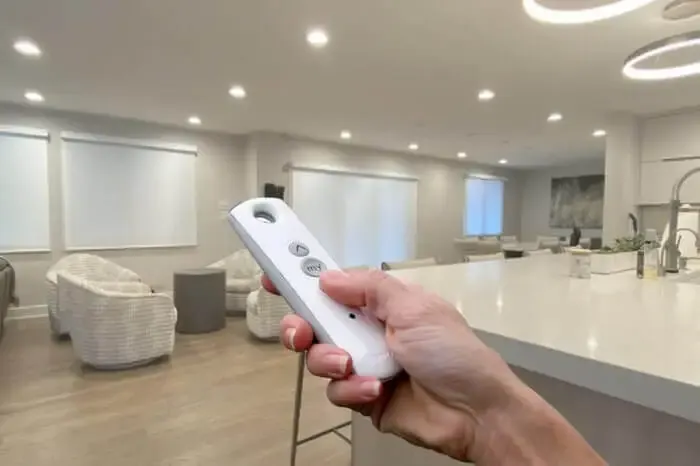
When a motorized shade goes quiet, check in order, not by guessing. Battery first, a wand runs about a year and nobody in Cicero writes the install date down. Limits second, a wrong stop point means lost position, not failure. Pairing third, remotes lose connection after a battery swap more than motors give out. Real failure means removing the motor and resetting limits once it's replaced.
Cords and tilt mechanisms
Cord and ladder wear is where most repair calls start, friction at the lock and at every slat hole. A crooked blind or a thick, fuzzy cord are the early tells. One low slat means something else broke, a ladder rung, not the lift cord. A snapped lift cord means the blind won't come up at all. Restringing rebuilds the whole run, and wood blinds often get new ladder tape at the same time.
The cord lock pinches the lift cord against a toothed pin to hold height. Age that pin, or feed it a swollen cord, and the blind slides down on release, or occasionally locks up hard instead. About as cheap as blind repair gets.
A wand spinning with no result is a stripped tilt gear nine times out of ten, the most common failure on wood blinds in Cicero. Forcing the wand past the slats' stop shears the nylon teeth. New gear in, new rod if it's rounded off too, new wand if the hook's cracked.
What a finished repair should look like
A finished job passes a checklist, not a vibe. Bottom rail level, headrail level in its brackets (an out-of-square opening gets a real conversation, not a shim jammed in), light gaps matching side to side, full travel both directions with no stalling, one hand lift, not a wrestling match.
Plenty of what gets blamed on the product started as a shortcut. A bracket in bare drywall works loose and tips the headrail. A cord dragging over a raw bracket edge instead of its guide shreds fast. Two minutes showing someone how far the tilt travels heads off a service call in Cicero months later, and the site gets left clean, no pencil marks, no offcuts, no packaging.
Most repair calls in Cicero turn out to be one small part, not a dead shade, and the trick is figuring out which part before anything gets ordered. Cicero Window Treatments diagnoses first and quotes second, in writing, so you know what you're paying for before we open a headrail. We're insured and bonded. Call (317) 863-9966 to describe what your blind or shade is doing.
Frequently Asked Questions
Is it worth repairing a blind, or should I just buy a new one?
On a single failed part, repair is usually the better value. A cord lock, a tilt gear, a wand, or a restring costs a small fraction of a new unit, and everything else in the blind is still working. The decision flips when the fabric has faded and gone brittle, when parts for a discontinued line are gone, when the covering never fit the opening properly, or when you've already repaired the same unit twice. The blunt test is whether the thing would be worth keeping if it worked perfectly today.
My wood blind wand spins and the slats don't move. What's that?
That's a stripped tilt gear, the most common wood blind failure there is. The wand drives a small worm gear in the headrail that turns a tilt rod along the length of the blind. Keep turning after the slats hit their stop and the nylon teeth shear off. You'll usually hear a faint clicking as the wand spins loose. The gear pulls out and a new one drops in, sometimes with a new tilt rod if that's rounded off too.
Can a blind be restrung, or is that a throwaway situation?
It can almost always be restrung. Lift cords wear where they bend, at the cord lock and where they pass through the holes in each slat, and eventually one frays or snaps. Restringing pulls the entire cord path and runs fresh cord through every slat and back through the headrail. It's patient work, not difficult work. On wood and faux wood blinds the ladder strings often get replaced at the same time, since a broken rung is what drops one slat lower than the rest.
 What Property Managers in Cicero Should Know Before Ordering Blinds
 What Roller and Solar Shades Cost in Cicero Homes Today
 Living With Motorized Shades in a Cicero Home