Cordless Blinds and Child Safety in Cicero Homes
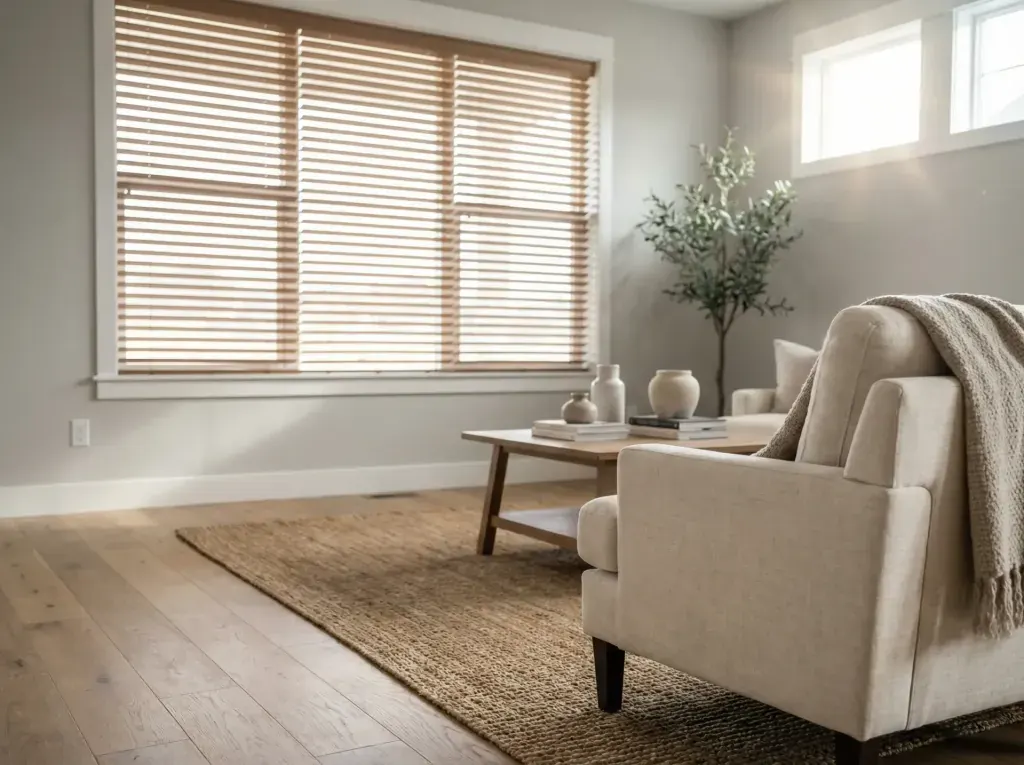
Cordless, cord-free, child-safe: window covering packaging uses these terms loosely enough that it's worth knowing what each one actually promises before assuming a product is safer than it is. The mechanism underneath the marketing is what matters, not the word on the box.
Why a Cord Is More Dangerous Than It Looks
The hazard is plain mechanics, not scare tactics. A pull cord or the loop on a continuous-loop blind hangs at a fixed length, and when a toddler standing on a bed or a windowsill gets a hand on it, that loop can end up around a neck faster than anyone expects. That's the real reason cordless costs what it costs. You're not paying for a nicer headrail, you're paying to remove a specific mechanical risk from the room.
Older stock is where this shows up most. If a Cicero home still has the mini blinds that came with the house a decade or more ago, there's a real chance they're the looped-cord style that current manufacturing has largely moved away from. Nobody budgets to replace blinds that still work, which is exactly how outdated hardware sticks around in a kid's room the longest.
None of this is about assigning blame. Cord-based lift was the standard for decades, and most buyers never think to ask what's holding the blinds up when they tour a house. The point of paying attention now is that the fix is available and, in most cases, no longer expensive enough to put off.
Cords, Cribs, and Furniture Placement
While you're working through which blinds to retrofit and which to replace, furniture placement is the part you can fix today for free. Walk through every room with a corded blind and check what's directly beneath or beside the window, a bed or a changing table, and anything else a kid could climb to reach it.
In a Cicero home with multiple kids at different ages, what's safe today can stop being safe in six months as a younger child starts climbing. Revisit the furniture layout each time a kid hits a new mobility milestone, not just once when the baby first arrives.
What Cordless Really Costs
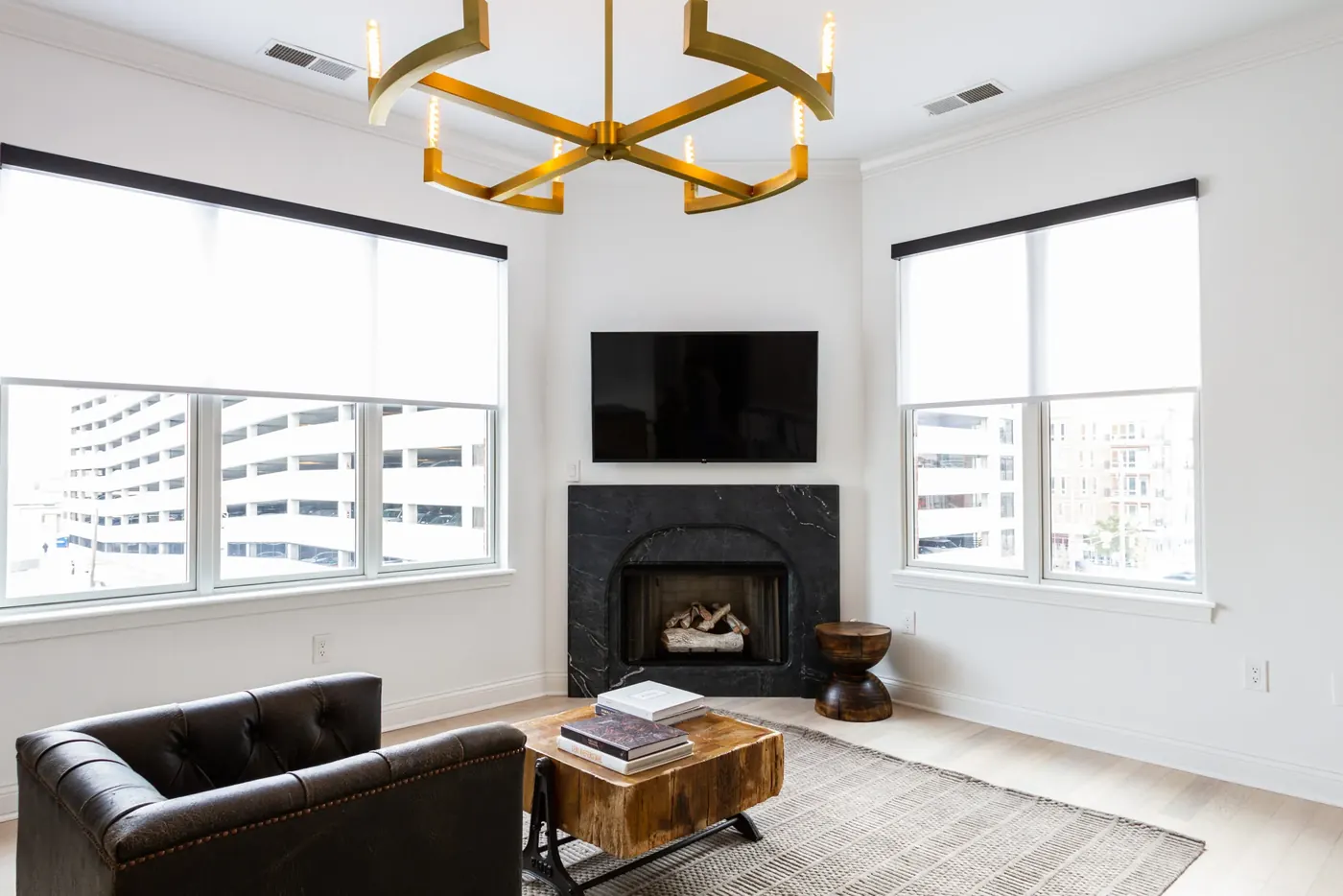
Cordless isn't the premium option it used to be. On stock cellular and roller shades, cordless lift is the default now rather than an upcharge, so a Cicero household shopping off the shelf usually doesn't have to hunt for it or pay extra. As a national range, expect roughly $60 to $250 a window for stock cordless shades, moving up to about $200 to $600 a window installed for custom cordless once you're choosing exact colors and fabric, with the mount depth confirmed at the measure.
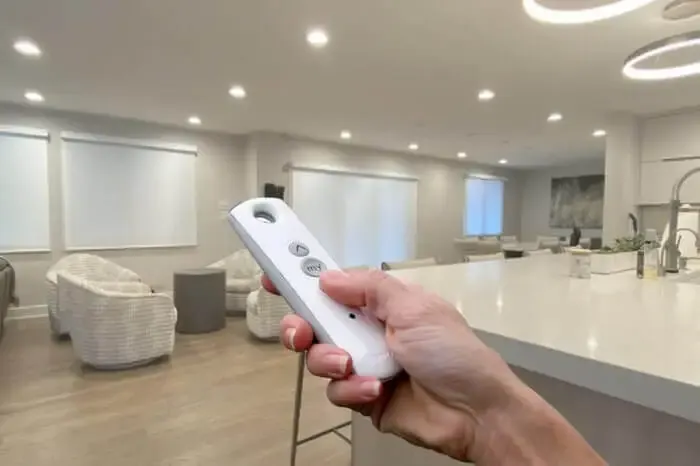
Motorization adds more on top of that, typically another $100 to $300 a window as a national range, and that's where the real convenience shows up on tall or hard-to-reach windows. For an ordinary window in a kid's bedroom, though, manual cordless usually handles the whole job without needing a motor at all.
A nursery or playroom doesn't need every window in the house redone at once, just the ones where a kid actually spends time. Cicero Window Treatments offers a free in-home measure focused on those rooms first, with cordless options sized and priced before the crib even arrives.
How Cordless Lift Systems Actually Work
For a nursery, cordless product means a spring clutch or spring motor inside the headrail holds the shade wherever it's left, with nothing hanging down to reach the crib rail. You operate it by hand on the bottom rail, which for most nursery windows only needs adjusting once or twice a day anyway.
Cellular shades are a common nursery pick because the cordless mechanism pairs well with the room's other job, cutting down on light and street noise. Roller shades work the same way and mount flatter to the frame, which matters in a smaller room where you don't want the headrail eating into limited wall space above the window.
For a nursery specifically, a light-filtering or room-darkening cellular fabric is worth the extra look, since the same cordless spring mechanism that makes it safe also tends to hold its position more reliably at a partial height, which matters for a room where naptime and overnight settings are two different things.
Making the Blinds You Already Own Safer
A blind advertised years ago as "safety cord" or "child-safe" isn't automatically the same as cordless, and it's worth checking which category an existing blind actually falls into before assuming it's fine. Some older safety cord designs used a tension device built into the cord itself, which helps but isn't foolproof if the tension weakens over time or the device gets unhooked and never reattached.
If you're not sure what's on your windows now, a quick look at the bottom of the cord tells you a lot. A loop that opens when you pull it apart is a genuine hazard. A cord that's fixed to a wall anchor or wound onto a cleat and stays taut is a safer interim setup, though it's still not the same guarantee as a cordless headrail.
Frequently Asked Questions
What's the difference between 'cordless' and 'child-safe' on a product label?
Cordless means there's no cord operating the lift function at all, full stop. Child-safe is a looser term that sometimes describes a product with a tension device or a shortened cord rather than one with no cord present. The two aren't interchangeable, and a product labeled child-safe can still have a cord that needs careful placement and furniture rules around it, where a genuinely cordless product removes that variable entirely.
Are motorized shades actually cordless, or is there still a cord somewhere?
A properly installed motorized shade has no external lift cord for a kid to reach, since the motor handles lift and the control is a wall switch or an app instead of a physical cord attached to the shade. There can still be a power cord for a plug-in motor, which matters for placement near an outlet, but that's a different kind of cord than the lift cords this issue is actually about, and it's typically routed well away from where a kid would stand.
Is the WCMA safety standard something the company is certified in?
No, and it's worth being clear about what that standard actually covers. ANSI/WCMA A100.1-2022 is a product standard that manufacturers build window coverings to, setting rules for cord length, breakaway tension devices, warning labels, and which stock products have to ship cordless. It's not a certification a company holds, it's a spec the product itself either meets or doesn't, and it's one of the reasons stock cordless product has become so much more common on shelves in recent years.
 What Property Managers in Cicero Should Know Before Ordering Blinds
 What Roller and Solar Shades Cost in Cicero Homes Today
 Living With Motorized Shades in a Cicero Home