Battery or Hardwired: Powering Smart Shades in Cicero
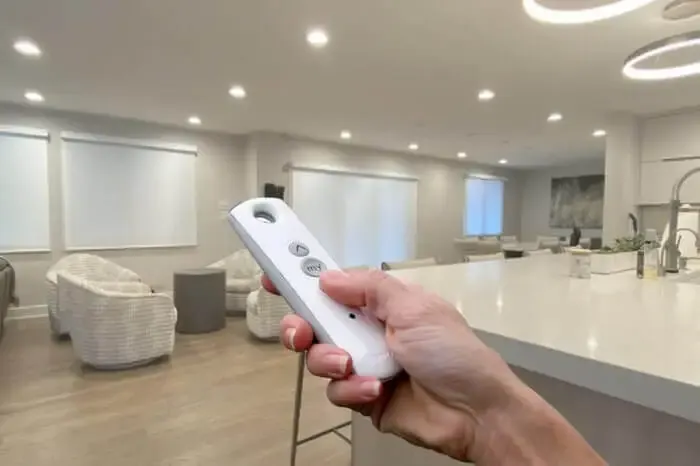
Ask five different people what "smart shades" means and you will get five different answers, a remote, an app, a voice command, a schedule, a scene that runs the whole house. All of it runs through the same handful of components, and understanding those components makes the whole shopping process a lot less confusing.
How Motorized Shades Actually Work
The mistake we see constantly: someone buys a motorized shade expecting it to work with their voice assistant right out of the box, and it doesn't, because the shade only came with a handheld remote. The remote and the motor talk directly to each other over radio. Getting Alexa or Google Home into that conversation needs a hub in the middle, and that hub is often a separate purchase.
Another one: assuming every motorized shade uses the same radio protocol. Some use a widely shared standard. Others use something proprietary to that manufacturer, and mixing shades from different manufacturers in Cicero doesn't guarantee they'll show up in the same app or the same hub.
We also see people order a motor without checking whether it's rechargeable-battery or hardwired, then get surprised at install about which one actually fits their window and wall situation.
What Actually Fails in a Smart Shade System
Ask what happens to the system during a power outage, specifically whether the hub reconnects automatically once power is restored or needs to be manually re-paired. Some manufacturers have handled this better than others, and it's a fair question to ask before buying into a particular ecosystem.
Ask how the hub performs at a distance from the router, and whether a range extender or a second hub is available if a Cicero home is larger or has a layout with a lot of walls between rooms and multiple floors.
And ask what a typical service call looks like when something goes wrong. A company that mostly deals with dead batteries and Wi-Fi hiccups is telling you something different than one that's constantly swapping out failed motors, and that difference says a lot about how the system was set up in the first place.
Voice Control and the Hub Question
Budget for the hub, not just the shades, if voice control matters to you. Most manufacturer hubs are a one-time purchase that can then handle quite a few shades, so the cost per window drops fast once you're past the first one or two.
Where costs sneak up: mixing brands. If a Cicero homeowner already owns shades from one manufacturer and adds a different brand later, expecting them to share one app, that often needs a second hub, sometimes a separate app entirely. Checking ecosystem compatibility before adding on to an existing system saves a second purchase down the road.
Voice assistant compatibility itself is usually free to the homeowner, in the sense that the platform doesn't charge extra for it, but getting a specific hub approved to talk to a specific voice platform is the manufacturer's decision, not something you can add yourself if the hub doesn't already support it.
Battery Life and Charging in the Real World
Battery-powered shade motors run on a rechargeable pack, almost always lithium-based, tucked into or alongside the roller tube. How long that charge lasts depends mostly on how often the shade moves and how big and heavy the fabric is. A narrow, light shade that cycles once or twice a day might run several months between charges. A wide, heavy shade cycling more often will drain faster.
Cold matters too, the same way it does with a phone battery left in a cold car. A shade motor near a drafty Cicero window in January can show weaker performance than the same motor in a warm interior room, even though nothing mechanically changed.
Charging usually means popping the battery tube out and connecting it to a charger, similar to charging a big power bank, and it takes a few hours. Plan on doing that a handful of times a year for an average shade, more often for one that gets used constantly.
Power Planning and Backup Control
A whole-home project is the right time to plan which shades group into which scenes. That grouping happens at the hub level, so it's worth mapping out room by room before the order goes in. A few common examples:
- Morning light easing into the kitchen on a set schedule.
- A movie-night setting that drops every shade in the media room at once.
- An all-open setting for cleaning day that opens the whole house together.
For a primary bedroom in a Cicero home, a wall-mounted keypad near the bed is often a nicer everyday solution than digging out a phone half asleep, and it still works if the network is having a bad night.
Weighing battery against hardwired, or one ecosystem against another, is easier with actual product in hand rather than a spec sheet. A free in-home measure lets you see and hear a motor running before you commit to a whole-house system.
Frequently Asked Questions
Do I need a hub for every smart shade brand?
Almost always, yes, if you want app or voice control. The shade motor itself usually talks over a radio protocol that your home Wi-Fi cannot read directly, so a hub sits in between and translates. A handful of newer motors build networking in directly, but that is still the less common setup, so check for it specifically rather than assuming.
Will my smart shades still work if the internet goes down?
The physical remote usually will, since it talks straight to the motor over its own radio signal rather than through your home network. App control and voice commands will not, because both depend on the hub reaching the internet. That is why we suggest keeping at least one physical remote in the house as backup.
How long does a shade battery actually last?
It depends heavily on how often the shade moves and how big it is. A narrow bedroom shade cycled once or twice a day might go several months between charges. A wide living room shade cycled more often, or one in a cold room, will need charging more frequently. Manufacturer estimates usually assume light, average use.
 What Property Managers in Cicero Should Know Before Ordering Blinds
 What Roller and Solar Shades Cost in Cicero Homes Today